
Consumer goods firms and auto companies are witnessing an upturn in rural demand, which had been lagging for most of FY24. Expectations of a bumper rabi crop harvest have helped turn the tide. The Reserve Bank of India's (RBI's) Monetary Policy Committee kept the repo rate unchanged last week, noting that as rural demand catches up, consumption is expected to support economic growth in 2024-25.

Sensex climbs higher at close, bluechip stocks in focus.

The external environment has worsened further. While the Finnish economy entered into a recession, Swedish economic growth also dipped. The Finnish gross domestic product (GDP) dropped 0.6 per cent in October-December, 2022. It was the second quarter of negative growth, which is a technical definition of recession.

Banking and capital goods stocks were out of favour, while oil and auto stocks saw buying interest.
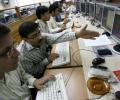
The 30-share Sensex closed down 115 points at 28,444 and the 50-share Nifty ended down 31 points at 8,524.

The NSE Nifty settled the day 38.85 points or 0.37 per cent lower at 10,500.90 after shuttling between 10,590.55 and 10,456.65, intra-day.

The 30-share Sensex ended down 245 points at 28,799 and the 50-share Nifty closed down 81 points at 8,750

The government has ordered monoclonal antibody from Indian Council of Medical Research to treat the child. It is the only available anti-viral treatment for Nipah virus infection, though it has not been clinically proven yet.
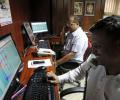
Top gainers from the Sensex pack are Asian Paints, Bajaj Auto, ITC, NTPC, L&T and HDFC, all up 2% each

While naysayers say the economy is on a downward spiral, optimists point out that India has experienced a shift of gears in the realm of policies, thanks to several initiatives of the Narendra Modi government, says Ashok K Lahiri.

Indian rupee has declined by about 25 per cent since December 31, 2014, and is nearing 80 against the dollar, the Lok Sabha was informed on Monday. The value of the rupee declined from 63.33 against a dollar on December 31, 2014, to 79.41 on July 11, 2022, Finance Minister Nirmala Sitharaman said in a reply quoting RBI data. The exchange rate of the Indian Rupee against the dollar was Rs 78.94 per dollar as of June 30, 2022, Finance Minister Nirmala Sitharaman said in a written reply.

On the day RBI announced a slew of measures to suck liquidity from the system to stem rupee volatility, a senior SBI official had told PTI that the bank was carrying an actual lendable surplus of Rs 20,000 crore (Rs 200 billion).

IMF members will also be examining whether China's heavy intervention in the yuan market was befitting of a freely convertible reserve currency

Indian society may be more advanced than we think it is, notes Ajit Balakrishnan.

India's equity markets are on a roller-coaster ride, after delivering spectacular returns for two consecutive years - in 2020 and 2021. The benchmark National Stock Exchange's (NSE's) Nifty50 is down 1.5 per cent in the first nine months of the current calendar year 2022 (CY22) as foreign portfolio investors sold Indian stocks due to rising bond yields in the US and across global markets, including India. The sell-off in the Indian equity markets has, however, not been broad-based and largely limited to sectors facing earnings headwinds from rising interest rates, lower commodity and energy prices, and likely economic recession in advanced economies.

Rajan's deputy Khan cautions against early celebration of falling inflation, unhedged forex exposure.


The poor and unbanked can take their rightful place as consumers of financial services only if the Modi government encourages different entities to advance the financial inclusion agenda, say Vikram Gandhi & Chandni Ohri.

The 30-share Sensex lost 12 points to end at 29,559 and the 50-share Nifty climbed 4 points to close at 8,914.

Stating that growth impulses and the fast-moving indicators are strong, Reserve Bank Governor Shaktikanta Das on Wednesday exuded confidence of the economy clipping at the projected 9.5 per cent this fiscal. Giving all the credit for the faster-than-expected recovery of the economy to the government, Das said the central bank has only been supporting the government in reviving the economy ravaged by the pandemic. Citing a slew of measures the government has taken since the pandemic struck in March 2020, the governor specifically mentioned tax cuts on fuels, tax resolution for the telecom sector, annulling of the retro tax legislation, sale of Air India, plans to sell some of the public sector banks and PLI scheme as the major reforms and growth-drivers bearing fruits now.

India's inflation trajectory in the coming months will be influenced more by the geo-political situation due to the war in Europe and its impact on supply chains and commodity prices. However, the country is better placed than most to "weather the storm" and achieve growth of close to 8 per cent in the current fiscal year, the finance ministry said in its latest monthly economic report on Thursday. "Through the channel of imports, elevated global crude and edible oil prices now have a significant impact on India's inflation outlook. "Government measures to keep the prices of these commodities in check, along with the recent hike in policy rates by the RBI, are expected to temper inflationary pressures in the economy," the monthly economic report for April, drafted by the finance ministry's economic division, said.

'67 per cent of our transactions happen digitally and about 93 per cent of transactions happen outside the branch.' 'Despite that, there is ample scope for promoting banking-related activities in branches.' 'So, for some time, we will have to, probably, live with the same structure.'

Moody's on Thursday raised India's GDP forecast for the calendar year 2020 upwards to -8.9 per cent contraction from -9.6 per cent contraction forecast earlier. Similarly, India's GDP forecast for the calendar year 2021 has been revised upwards to 8.6 per cent from 8.1 per cent projected earlier. The report released by Moody's Investors Service attributed the reason behind better growth to the falling of coronavirus cases in the country.
Agencies, whether public sector or private sector, may have to pay goods and services tax on the charges they collect on behalf of the government from clients. The authority for advance rulings (AAR), Telangana, has ruled that e-procurement transaction fee collected by an agency on behalf of the government is chargeable to GST, said Rajat Mohan, senior partner at AMRG & Associates. The AAR also ruled that neither services provided by the agency to the government, nor services provided on behalf of the government to the business entities are exempt from GST, he informed about the case.

In advanced economies where the financial system is more matured, the form of shadow banking is more of risk transformation through securitisation.

Son's offer to supply free power after 25 years is based on the idea that the cost of running a solar plant would progressively decline while its efficiency would increase.
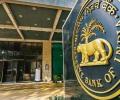
With inflation remaining at elevated levels, central banks around the world, including the Reserve Bank of India (RBI), will kill excess demand in economy over the next six to eight months, sources in the know said. They also indicated that there could be a rate hike in June, when the inflation forecast for the current financial year would be raised. The RBI, the sources said, might announce more steps such as raising the limit on held-to-maturity (HTM) bonds to support government borrowings but might not come out with any further quantitative easing GSAP (Government Securities Acquisition Programme) measures.

Delivering a public speech hours after the RBI launched a rescue act for Yes Bank on March 6, Governor Shaktikanta Das reiterated the RBI's affirmation to do whatever was needed to combat the coronavirus impact. On that day, India had only one confirmed COVID-19 infection, the World Health Organisation was five days off from declaring it as a pandemic and the financially debilitating lockdowns were not even on the horizon. Das' promise on efforts to mitigate COVID-19 impact appeared as a footnote in news reports from the event.
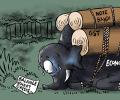
'The current budgetary practice of shifting expenditures off-balance sheet in order to be seen to be meeting fiscal targets should be discontinued; additional fiscal stimulus would be imprudent; individual income tax rates should not be cut; GST rates should not be raised now,' advise Arvind Subramanian and Josh Felman.

This is the index's biggest single-day fall in almost a month

With a sole mandate of inflation targeting, RBI wears many hats.

The S&P BSE Sensex ended 190 points up at 23,382.
The central bank is the money manager of the government, and not a guarantor of any debt.
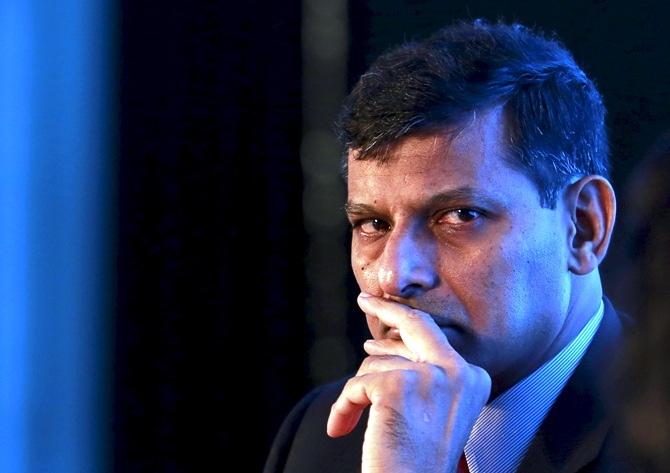
The NPA of the public sector banks rose to 6.03% as of June 2015.

25 student suicides in 2023 at India's coaching hub Kota have revealed the mindboggling stress children confront every day, reports Prakash Bhandari.

The RBI's mistake may have been in interpreting its mandate to maintain retail inflation at 4%, with 2% leeway in either direction, as being a mandate that permitted it to do nothing even when inflation was at or near the upper bound of 6%, observes T N Ninan.

Neither pharma nor IT would have become the stars of the economy without the active but largely invisible hand of the Indian State, says Ajit Balakrishnan.

The Supreme Court has refused to interfere with the government and RBI's loan moratorium policy, and declined to extend the six-month loan moratorium period.
RBI declines to accede to plea, upheld by Padmanabhan panel, for priority sector tag; feels move would dilute claims of those needing it more.
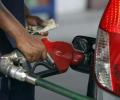
A looming global shortage of diesel in Europe presents India with more than one opportunity to profit from strong margins. A shortage of the fuel, a key contributor to inflation, has been exacerbated by the conflict in Ukraine, and western sanctions on Russian fuel supplies. The slowdown in natural gas supply means the West needs diesel to heat their homes this winter.
